Dream About Death Meaning: Why Your Brain Never Shows You the End
A hundred ways to die, and counting
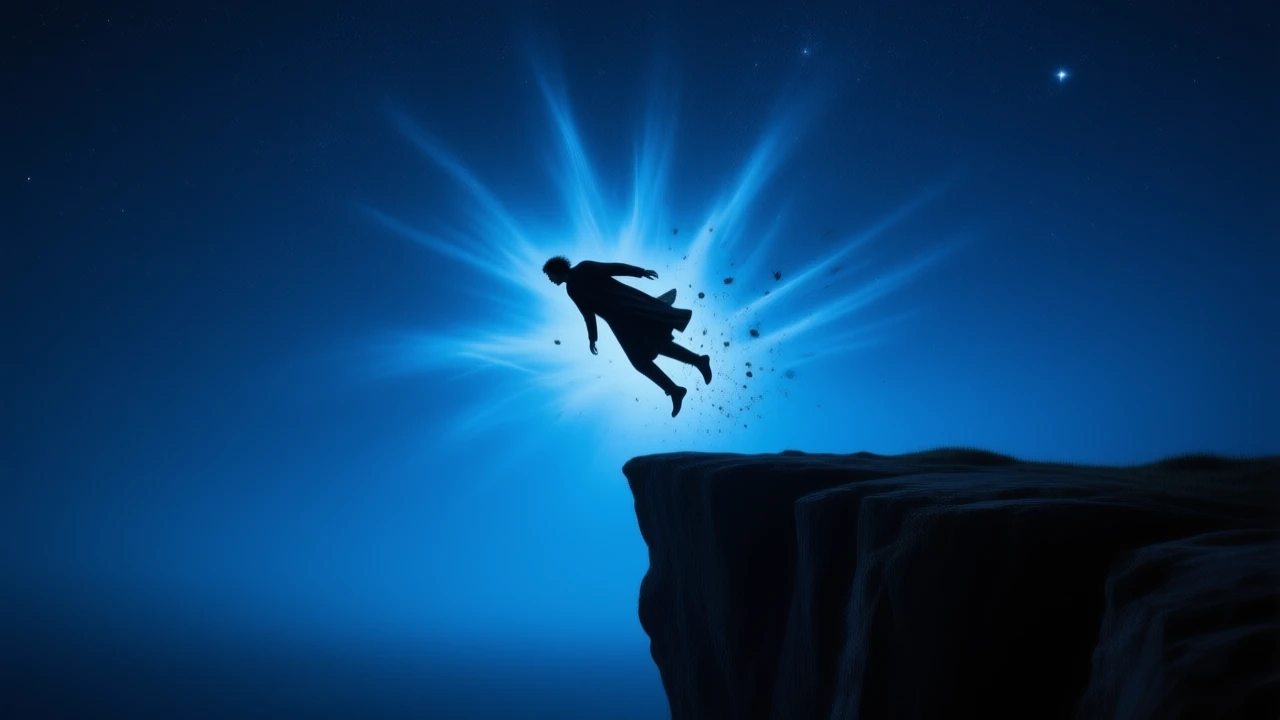
In dreams, people manage to die in every conceivable way, and for as long as I can remember I've probably died about a hundred different deaths myself — mine and other people's. Falling is easily the most frequent, followed by burning, drowning, a plane crash or two, dying in some vague war I never signed up for, and at least once getting bitten by a zombie. I've covered falling in dreams before, and death dreams often share the same machinery.
It's a strange kind of catalog to keep. Not morbid, exactly — more like a highlight reel your brain edits while you're not looking.
The one thing your brain won’t show you
Here's the part most people already know: you can never actually dream the moment of your own death, so the dream always cuts to something else right after. Every method on that list above ends the same way — I wake up a beat before the actual dying part, every single time, no exceptions. A shame, really — there's one particular ending I'd love to have witnessed in full, and I never got the payoff.
That gap isn't a glitch. It behaves a lot like the split discussed in manifest vs. latent content: the dream shows you the falling, the fire, the water closing over your head, and then it edits around the one frame that would actually resolve it.
The most creative one was a vacuum chamber
Among the ways I've died, falling wins by volume, but one stands out for sheer creativity. I was thrown into some kind of sealed chamber, and the air around me started getting pumped out. I didn't suffocate first — the vacuum just kept pulling, and I felt my whole body slowly start to swell, like the emptiness outside was trying to turn me inside out. That's as far as it ever gets. No finale, no confirmation that swelling indefinitely is even how a vacuum would kill a person — just the sensation building, and then I'm awake.
A close second, from years back: I somehow became a war hero, and stepping up to receive a medal from the president, I discovered the president was actually an enemy spy — poisoned by a hidden needle during the handshake. The dream ended right there, on the cliffhanger, with the important part — did I actually die, was the country saved — left completely unresolved.
Two wildly different setups, same missing ending. Your sleeping brain, it turns out, is a decent screenwriter and a terrible editor.
It depends entirely on who dies
I don't fully buy dream interpretation as a discipline, but the one thing I do believe is that a death dream's meaning depends heavily on who's dying — it isn't automatically bad. The clearest example I've got: I once dreamed I was at a friend's funeral, genuinely grieving, only for the dream to reveal the whole thing had been staged — a joke, engineered specifically to drag a bunch of us who hadn't seen each other in years into the same room again. Nobody had actually died. The "death" was just the excuse the reunion needed.
This is where Jungian shadow work gets more useful than a generic dictionary entry: a death in a dream often marks an ending, not a doom — the death of an old role, an old distance between people, an old version of a friendship standing in the way of it starting back up. My brain apparently needed a funeral to justify the reunion my waking self hadn't gotten around to arranging.
The one that never commits
Falling deserves a side note, since it's the one that recurs the most and behaves the least like the rest. Most of my death dreams commit to a method and interrupt it right before the end. Falling doesn't even always bother committing — plenty of times I'm falling, and falling, and then I'm just somewhere else, no impact, no death, no resolution needed because the premise quietly dropped itself. If the other death dreams are unfinished sentences, the falling ones are sentences that trail off entirely.
An older, more generous reading
Plenty of cultures have their own long-standing take on this, and it runs the opposite direction from how the dream feels in the moment: in Chinese folk belief, dreaming of death is often read as a sign of good fortune or a major life change on the way — not literal death, more like an ending clearing space for something else. I can't verify any of that, obviously, but it lines up oddly well with my own funeral-that-wasn't: the "death" in that dream turned out to be a beginning wearing a costume.
No science, just a thousand opinions
Truthfully, there's no solid scientific account of dream interpretation right now. If you're curious, it's worth browsing what people argue about on forums — I've followed this Reddit thread for a while, and you'll notice everyone reads the exact same dream completely differently. Treat it as entertainment, not gospel.
Compare that to the more evidence-adjacent territory covered in threat-simulation theory, and you'll see the field split cleanly: some death dreams are the brain rehearsing danger, others are just narrative debris with no threat behind them at all.
Read it forward, not backward
I've landed on this: every dream leaves room for a positive reading, as long as you're willing to look for it. A death dream isn't a verdict handed down while you slept — it's raw material, and you get to choose what you build with it. The vacuum chamber taught me nothing useful about physics, the president-spy fiasco taught me nothing about geopolitics, and the fake funeral didn't cost anyone anything real — but it did remind me that even my subconscious will stage a death just to get a few old friends back in one room.