Anima and Animus in Dreams: A Jungian Guide to Your Inner Counterpart
Anima and Animus in Dreams: A Jungian Guide to Your Inner Counterpart

The Genesis of Anima & Animus: Jung's Archetypal Bridge to the Unconscious
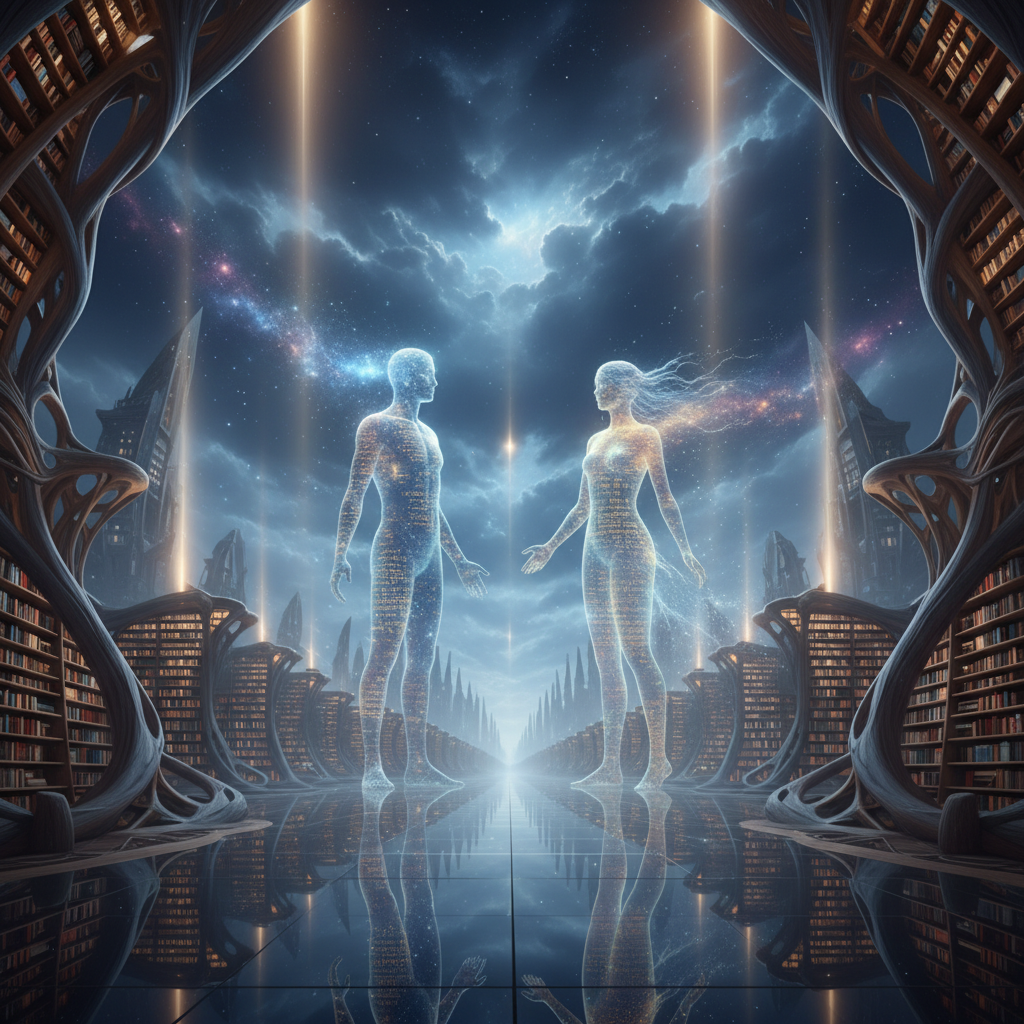
In the early 20th century, Carl Gustav Jung diverged from his mentor, Sigmund Freud, on the fundamental nature of the unconscious mind. Where Freud saw a repository of repressed personal desires, primarily sexual, Jung envisioned a far deeper, more ancient realm: the collective unconscious. This universal psychic layer, shared by all humanity, is structured by archetypes—primordial patterns and images. Among the most crucial of these are the Anima and Animus. The Anima is the unconscious feminine aspect within a man's psyche, while the Animus is the unconscious masculine aspect within a woman's. These are not merely internalized parental figures but complex, autonomous psychic structures that serve a vital compensatory function. They represent what is missing in the conscious attitude. A man who consciously identifies heavily with logic and reason (Logos) will possess an Anima rich in feeling and relationality (Eros), which often appears in his dreams. Conversely, a woman who consciously operates from a place of Eros may have an Animus that embodies focused assertion, logic, and spiritual meaning. These figures are the quintessential soul-guides, the inner counterparts that bridge the conscious ego to the vast depths of the Self, a central concept in The Master Encyclopedia of Dreams. Their appearance in dreams signals a call for integration, a demand to acknowledge and unite with one's contra-sexual nature to achieve psychological wholeness, or 'individuation'.
An Evolving Dialogue: From Freudian Repression to Jungian Integration
The interpretation of opposite-sex figures in dreams has undergone a significant evolution, marking a critical shift in psychodynamic thought. This progression reflects a deepening understanding of the psyche's complexity, moving from a model of simple wish fulfillment to one of profound archetypal dialogue. The development highlights the transition from viewing these figures as mere symbols of external conflicts to recognizing them as active agents in the process of self-realization.
| Perspective | Interpretation of Opposite-Sex Figure in Dreams | Therapeutic Goal |
|---|---|---|
| Freudian Psychoanalysis (c. 1900s) | A manifestation of repressed sexual desire, often linked to the Oedipus or Electra complex. The figure is a stand-in for a parental figure or an object of forbidden longing. | To uncover and resolve repressed psychosexual conflicts from childhood, thereby reducing neurotic symptoms. |
| Classical Jungian Analysis (c. 1920s-1950s) | The appearance of the archetypal Anima or Animus. The figure's nature (e.g., nurturing, destructive, wise) reflects the current state of the dreamer's relationship with their own inner contra-sexual soul-image. | To differentiate the Anima/Animus from projections onto external people and integrate its qualities into consciousness, fostering psychological balance and individuation. |
| Contemporary & Relational Psychology (c. 1980s-Present) | While acknowledging the archetypal dimension, this view adds a layer of social and relational context. The figure may represent internalized cultural gender roles, relational patterns, or aspects of the self that are emerging in response to modern, more fluid understandings of gender and identity. | To explore the personal and cultural meanings of the figure, fostering a more flexible and authentic sense of self that transcends rigid gender binaries and promotes healthier interpersonal relationships. |
This timeline demonstrates a clear trajectory from pathology to potentiality. Freud's model pathologized these dream figures as symptoms of unresolved issues. Jung reframed them as essential guides on the path to wholeness. Contemporary views build on Jung's foundation, adding crucial nuance about how culture and personal experience shape these universal archetypes. The core insight remains: these are not just dreams about others, but dialogues with the deepest parts of ourselves, where we confront the meaning of shadow in dreams jung and the light of our potential.
Practical Engagement: From Dream Journal to Active Imagination
Recognizing and engaging with the Anima or Animus requires moving beyond simple dream recall into a practice of deep listening. The first step is meticulous dream journaling. When an opposite-sex figure appears, record not just their actions but their emotional aura. Is the Anima figure a terrifying siren, an aloof princess, a nurturing earth mother, or a wise priestess (Sophia)? Is the Animus a brutal thug, a seductive celebrity, a capable guide, or a spiritual master (Hermes)? These correspond to Jung's proposed four stages of development for each archetype. The emotional charge of the dream—be it fear, longing, anger, or awe—is a primary clue to what the unconscious is trying to communicate about your relationship to these inner energies. For instance, a recurring dream of being criticized by a council of severe-looking men might represent a woman's negative Animus, embodying internalized patriarchal judgment that stifles her creativity. Similarly, a man might dream of being lost and then rescued by a mysterious, capable woman, signaling his Anima's call to develop his own intuition and relational skills. Once a pattern is identified, one can move to a more advanced Jungian technique: Active Imagination. This is not daydreaming but a conscious, focused meditation where one re-enters the dream scene and intentionally engages the figure in dialogue. Ask them directly: 'Who are you?' 'What do you want from me?' 'What do you represent?' This practice transforms the dreamer from a passive observer into an active participant in their own psychological integration, a process enriched by understanding the complex grammar of jungian dream analysis symbols list.
An Illustrative Example: What Anima Integration Can Look Like
To make this concrete, here is an illustrative composite, not a documented clinical case, of how work with the Anima is typically described in Jungian practice. Imagine a highly successful but emotionally sterile businessman, whom we'll call 'Arthur'. Arthur was plagued by a sense of meaninglessness and an inability to form deep connections. His dreams were consistently populated by a 'manic pixie dream girl' archetype—an elusive, playful, yet frustratingly ephemeral young woman who would lead him on beautiful but nonsensical journeys through surreal landscapes before vanishing. Initially, Arthur dismissed these dreams or, through a Freudian lens, would have seen them as mere wish-fulfillment for a more exciting life. However, his Jungian analyst guided him to see this figure not as an external desire but as his own underdeveloped Anima, his soul, desperately trying to reconnect him with emotion, spontaneity, and the non-rational aspects of life he had long suppressed in favor of corporate logic. Through active imagination, Arthur began to 'speak' with this figure. She revealed that his rigid control was suffocating her. This dialogue was transformative. He was encouraged to take up painting, an activity he had abandoned in youth. This creative act became a bridge, allowing the Anima's energy to flow into his conscious life. Over time, his dreams shifted. The elusive girl matured into a helpful companion, a 'Sophia' figure who would offer cryptic but profound insights. This inner integration led to external change: Arthur became a more empathetic leader and was finally able to build a fulfilling romantic relationship. His case shows how, as described in detailed dream analyses, the goal is not to possess the dream figure but to honor its message and integrate its qualities. You can explore further analyses of Anima and Animus in Dreams to see more examples of this profound process.
Future of the Inner Dialogue: Archetypes in the Post-Binary Age
As societal understanding of gender becomes more fluid and less binary, the classic interpretation of Anima and Animus faces an essential evolution. The core principle—integrating one's unconscious, contra-sexual aspects—remains robust, but its expression is becoming more nuanced. The future of this work lies in moving beyond a rigid male/female framework to embrace the concept of a spectrum of psychic energies. For individuals who identify as non-binary or gender-fluid, the 'inner other' may not be a single figure but a dynamic interplay of multiple archetypal energies. The Anima and Animus may manifest less as a single man or woman and more as symbolic representations of 'Eros' and 'Logos'—the principles of relating and discriminating—which exist in everyone regardless of gender identity. Technology may also play a transformative role. The emergence of sophisticated virtual reality could offer unprecedented platforms for Active Imagination, allowing individuals to literally step into their dreamscapes and interact with their inner archetypes in a fully immersive environment. AI-driven journaling tools could help identify subtle archetypal patterns across years of dream data, revealing the long-term narrative of one's individuation journey. While the language and symbols will undoubtedly adapt to our changing cultural landscape, the fundamental quest remains the same. The Anima and Animus, in whatever form they appear, will continue to serve as the timeless, essential bridge between the ego and the Self, guiding humanity toward a more integrated and complete existence.