Journey Through the Veil: The Healing Power of Shamanic Dream Practices
Journey Through the Veil: The Healing Power of Shamanic Dream Practices

The Core Essence: Bridging Consciousness Through Shamanic Dream Healing
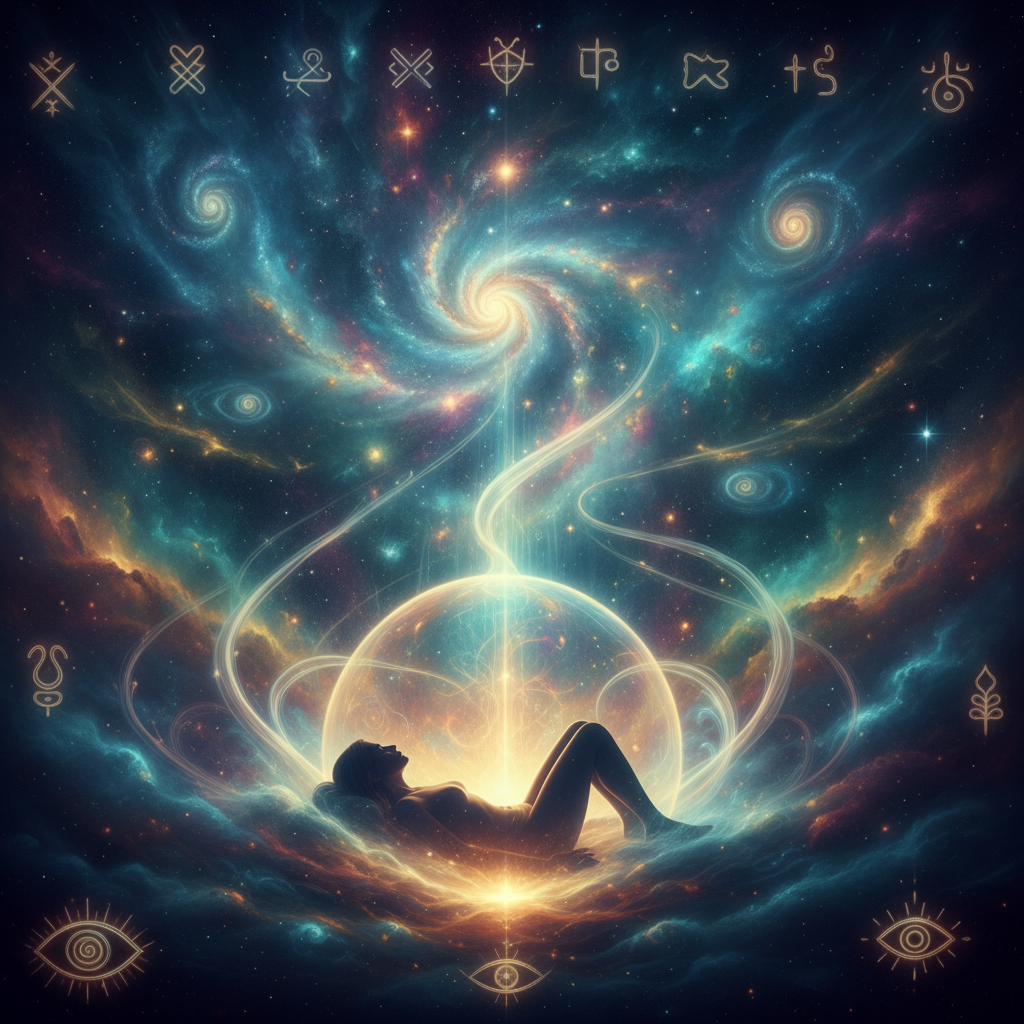
At the heart of shamanic dream healing lies a profound understanding of the human psyche—a perspective that views dreams not merely as random nocturnal firings of the brain but as sacred portals to deeper wisdom and transformative power. This ancient practice, rooted in indigenous traditions worldwide, posits that the dream realm is a vibrant, living extension of our waking reality, a direct conduit between our conscious mind and the vast, often untapped reservoir of the subconscious. It's a space where the ordinary rules of time and space dissolve, allowing for direct interaction with archetypal energies, spirit guides, and fragmented aspects of the self. The underlying logic is that our consciousness is not confined to our physical body but can expand and journey into non-ordinary reality (NOR) during sleep, or even in a waking trance state, to gather insights and facilitate healing.
From a modern psychological standpoint, particularly through the lens of Carl Jung's analytical psychology, shamanic dream healing resonates deeply. Jung's concept of the collective unconscious, replete with universal archetypes, mirrors the shamanic belief in a shared spiritual landscape accessible through dreams. Just as Jung saw dreams as compensatory mechanisms, revealing what the conscious mind suppresses, shamans view dreams as diagnostic tools, offering clues to spiritual imbalances, soul loss, or blockages that manifest as physical or emotional ailments in waking life. The dream acts as a personalized narrative, symbolically representing an individual's inner world, their challenges, and their latent resources. Engaging with these dream symbols and narratives, often with the guidance of a shaman or through learned self-practice, allows individuals to confront shadows, integrate fragmented parts of their psyche, and reclaim their inherent power. This process goes beyond mere interpretation; it's an active engagement, a journey into the self to re-establish harmony and wholeness. Understanding the profound cultural and spiritual evolution of dreams helps contextualize this ancient wisdom within contemporary thought, illustrating how universal human experiences are processed through the lens of the dream world for healing and insight.
The scientific connection, while less direct, is emerging through studies on altered states of consciousness, neuroplasticity, and the therapeutic benefits of mindfulness and visualization. While traditional science may not fully embrace 'spirit guides' or 'soul retrieval,' it acknowledges the powerful role of belief, intention, and symbolic processing in psychological healing. Shamanic dream healing harnesses these very mechanisms, utilizing the brain's natural capacity for self-repair and integration during sleep. By consciously setting intentions before sleep, individuals are priming their subconscious to work on specific issues, leveraging the brain's problem-solving capabilities in a state free from the ego's usual constraints. This deep dive into the dream world facilitates not just psychological insight but often a profound spiritual re-connection, fostering a sense of meaning and purpose that is itself deeply therapeutic. It suggests that healing isn't just about fixing what's broken, but about remembering and restoring an innate sense of wholeness and connection to a larger cosmic order, where dreams are the guiding stars.
External Connections: Shamanic Dreams Across Cultures and Modern Applications
Shamanic dream healing is not a monolithic practice; its forms and interpretations have evolved across countless cultures and historical epochs, each bearing unique imprints of their environment and worldview. Originating in indigenous tribes spanning Siberia, the Americas, Africa, and Australia, these practices were integral to the community's well-being and survival. For these ancient peoples, the dream world was a parallel reality, a sacred dimension where shamans, acting as intermediaries, would journey to seek guidance from ancestors, diagnose illness, retrieve lost souls, or gain knowledge for hunting and healing. Dreams were often communal events, shared and interpreted by the entire tribe, guiding collective decisions and reinforcing cultural values. This deep reverence for dreams stemmed from a worldview where the spiritual and physical realms were not separate but intimately intertwined, and where every aspect of nature held a spirit with which one could communicate through altered states of consciousness, including dreaming. The emphasis was on maintaining balance, both within the individual and between the individual and their environment.
In the modern world, this ancient wisdom finds new life, adapting to contemporary needs and integrating with a diverse array of alternative therapies and spiritual movements. Shamanic dream healing is increasingly offered alongside practices like energy healing, reiki, sound therapy, and even certain forms of somatic psychology. Its principles are being explored in mainstream therapeutic settings, particularly in trauma recovery, where the symbolic language of dreams can offer a safe pathway to process difficult experiences. The concept of 'soul retrieval,' for example, where fragmented parts of the self (often lost due to trauma) are brought back and integrated, resonates with modern therapeutic approaches to reintegrating dissociative states. Practitioners often combine traditional shamanic techniques with contemporary psychological understanding, creating a holistic framework for healing. For instance, the understanding of different shamanic techniques for healing, such as extraction or psychopomp, illustrates how ancient practices are applied to modern emotional and spiritual distress.
However, the journey of shamanic dream healing into the modern consciousness is not without its complexities. Social acceptance varies widely, with some embracing it as a powerful spiritual path and others viewing it with skepticism or even as pseudo-science. Ethical considerations are paramount, particularly regarding cultural appropriation when non-indigenous practitioners adopt traditional practices without proper respect, training, or acknowledgment of their origins. The commercialization of shamanic practices also raises concerns about authenticity and the potential for exploitation. Responsible integration requires rigorous training, a deep respect for indigenous roots, and a commitment to ethical practice. Practitioners are increasingly emphasizing the importance of 'core shamanism'—universal principles and techniques applicable across cultures—while still honoring the specific traditions from which they draw inspiration. As interest in holistic well-being grows, the conversation around shamanic dream healing is evolving, moving towards a more nuanced understanding that respects its spiritual foundations while exploring its potential for profound healing in a secular, diverse world. This ongoing dialogue ensures that these ancient practices can continue to offer relevant pathways to self-discovery and recovery for those seeking deeper meaning and healing.
Sensory Practice: Cultivating Your Shamanic Dream Journey
Embarking on a shamanic dream healing journey is an active, experiential process that begins long before you close your eyes. It requires cultivating a conscious relationship with your dreams, treating them as intentional spiritual voyages rather than passive nocturnal events. The first step involves setting clear intentions before sleep. This isn't just a wish; it's a focused request to your subconscious and the dream world. For example, you might ask for guidance on a specific problem, for healing of a particular emotional wound, or for a meeting with a spirit guide. Write your intention down, speak it aloud, or visualize it clearly. This primes your mind to seek out and recognize relevant experiences within your dreams. Developing a consistent dream recall practice is crucial. Keep a dream journal by your bedside and record your dreams immediately upon waking, even if it's just fragments. Pay attention to recurring symbols, emotions, and characters, as these are often messengers from your deeper self or the spirit realm.
Advanced practices include methods for entering lucid dreaming—the state where you become aware you are dreaming while still in the dream. While some achieve this spontaneously, techniques like 'reality testing' (checking if you can fly, breathe underwater, or push a finger through your palm during waking hours) can train your mind to do the same in dreams. Once lucid, you gain agency within the dreamscape, allowing you to consciously engage in healing journeys. This might involve actively seeking a spirit animal or guide for wisdom, revisiting past traumatic events to reframe them, or performing a 'soul retrieval' within the dream to reclaim lost aspects of your being. In shamanic traditions, soul retrieval is a profound healing modality where parts of one's vital essence, believed to have 'fled' during trauma or shock, are gently brought back and integrated. In a dream state, this can manifest as finding a lost child-self or a powerful animal ally that represents your inner strength, and bringing it back into your awareness for profound lucid dreaming PTSD healing.
To deepen your practice and infuse it with ritual, consider creating a personal dream altar. This sacred space, even if small, can serve as a physical anchor for your intentions and a place to honor your dream experiences. Adorn it with objects that hold personal meaning or symbolism related to your dream goals: a feather for spirit communication, a crystal for clarity, a symbolic image, or a journal to house your dream records. Before sleep, you might perform a small ritual at your altar, such as lighting a candle, offering a prayer, or meditating on your intention. Upon waking, use the altar as a place to reflect on your dreams, offering gratitude for insights received. Incorporating elements of conscious dreaming, as explored in articles like Conscious Dreaming, can help you not only bring awareness into your dream life but also integrate these skills into your waking reality. These practices—from intention setting and dream journaling to lucid exploration and ritual creation—collectively empower individuals to become active participants in their healing journey, transforming the nocturnal hours into a powerful laboratory for self-discovery and spiritual growth.
Real Cases: Testimonies of Transformation through Shamanic Dream Healing
The true power of shamanic dream healing is best understood through the tangible shifts it brings to individuals' lives. While formal clinical trials are still emerging, a wealth of anecdotal evidence, case studies from practitioners, and timeless indigenous wisdom attest to its efficacy in addressing a myriad of modern-day afflictions. Many individuals struggling with chronic anxiety and depression find that conventional treatments often fall short of addressing the root spiritual or energetic imbalances. Through shamanic dreamwork, guided by intention, they often encounter symbolic representations of their anxieties, allowing them to engage with and transform these fear-based energies directly within the dreamscape. For example, a common experience involves confronting a metaphorical 'monster' or 'shadow figure' in a dream, only to discover it represents an unacknowledged part of themselves, leading to a profound integration and release of long-held tension upon waking.
One compelling case involved a young woman suffering from severe PTSD after a traumatic accident. Traditional therapy offered coping mechanisms, but she felt a part of her was still 'stuck' in the past. Through guided shamanic dream journeys, she intentionally revisited the scene of the accident within her dreams, not to relive the horror, but to find and retrieve a younger version of herself—a 'soul fragment'—that had been terrified and isolated. In her dream, she was able to comfort this younger self, offering protection and bringing her back into her current consciousness. This dream experience, she reported, was more transformative than years of talking therapy, as it allowed her to symbolically heal the initial wound at a deep, subconscious level. Her waking life saw a significant reduction in flashbacks and a renewed sense of wholeness, demonstrating the power of decoding dreams to release repressed emotions and trauma.
Furthermore, shamanic dream healing offers profound guidance for those seeking clarity on their life's direction or grappling with significant transitions. A man at a crossroads in his career sought help to discern his true purpose. Through a series of intentional dreams, he journeyed to a sacred inner landscape where he encountered a spirit animal—a wise owl—that communicated a clear message about aligning his work with his deepest values. This vivid dream experience provided him with the conviction and courage to leave a high-paying but unfulfilling job and pursue a path more aligned with his spiritual calling. These stories, whether modern anecdotes or ancient tribal accounts passed down through generations, underscore a common thread: dreams provide a personalized roadmap for healing and growth. They bypass the rational mind's limitations, speaking directly to the soul in a language of symbols and feelings. By honoring and actively engaging with these nocturnal narratives, individuals are empowered to become their own healers, guided by the innate wisdom that resides within their very dreams, leading to deeper self-understanding, emotional liberation, and a stronger sense of purpose in their waking lives.