
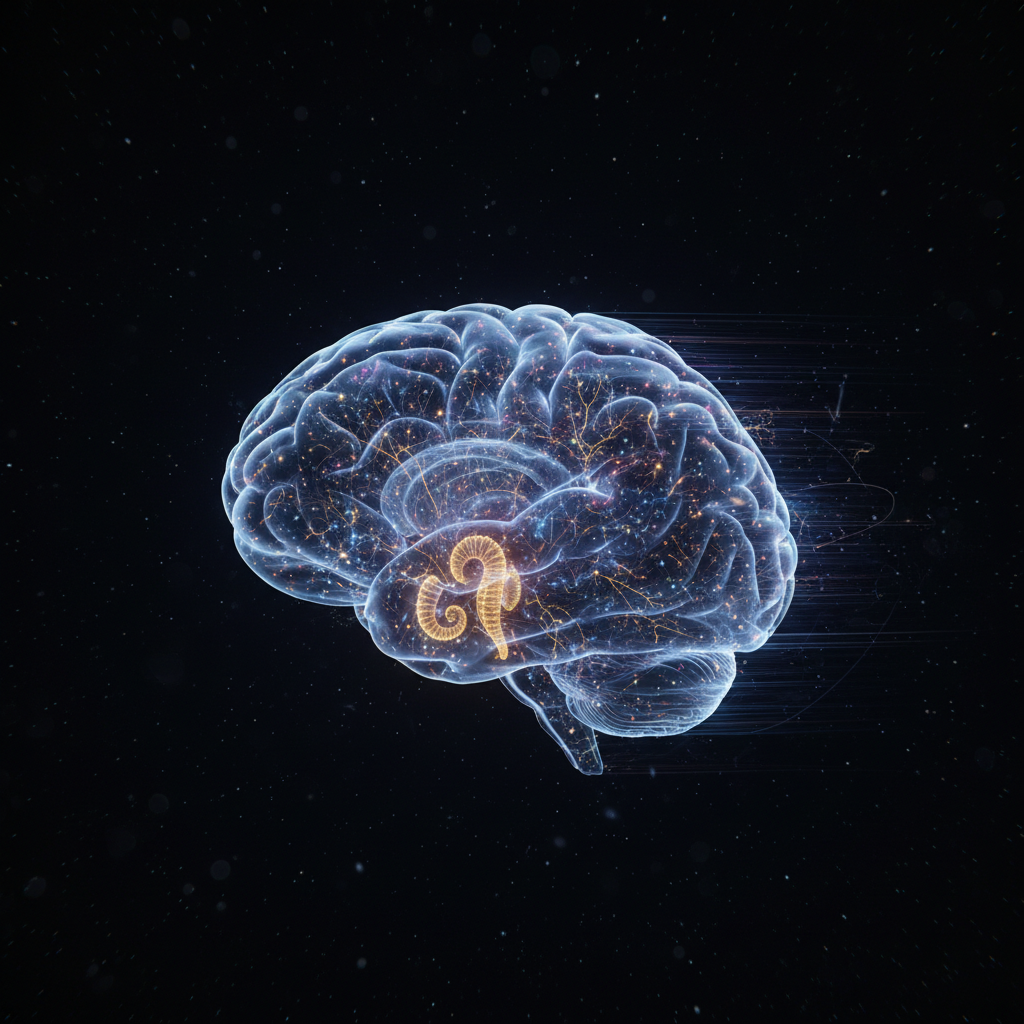
A Definitive Study: How REM Sleep and Memory Consolidation Rewire Your Brain
A Definitive Study: How REM Sleep and Memory Consolidation Rewire Your Brain

The Nocturnal Architect: Memory's Blueprint in the Sleeping Brain
While the body lies still, the brain engages in a nightly act of profound architectural revision. The conscious mind is offline, yet a feverish activity unfolds within the neural circuitry, particularly during Rapid Eye Movement (REM) sleep. This phase, long associated with vivid dreaming, is now understood through extensive research as a critical workshop for memory consolidation. It is not a passive filing system but an active, intelligent process of sorting, strengthening, and integrating the day's experiences into the vast library of long-term knowledge. The core mechanism involves a complex dialogue between brain structures, a delicate dance of neurotransmitters, and a strategic pruning of synaptic connections. Understanding this process is not merely academic; it unlocks the fundamental principles of learning, emotional regulation, and cognitive health. To truly grasp the science, we must dissect the procedure step-by-step, as the brain would execute it during a night of restorative sleep.
The Brain's Consolidation Protocol: A Step-by-Step Analysis
The transformation of a fleeting experience into a durable memory follows a structured, multi-stage protocol orchestrated during sleep. This process is not monolithic; different sleep stages play specialized, cooperative roles. Here is a breakdown of the critical steps involved in this neurological feat.
- Step 1: Initial Encoding & Hippocampal Tagging (Wakefulness). This phase begins long before sleep. During the day, new experiences and information—categorized as declarative memories (facts, events)—are initially captured by the hippocampus. This seahorse-shaped structure in the temporal lobe acts as a temporary, high-capacity buffer. It rapidly forms a preliminary trace of the memory, 'tagging' the disparate cortical modules (visual, auditory, spatial) that were active during the experience. These initial connections are fragile and highly susceptible to interference or decay without further processing. This is the raw data awaiting curation.
- Step 2: Systems Consolidation & The NREM Dialogue (Non-REM Sleep). As sleep begins and deepens into non-REM (NREM) stages, particularly Slow-Wave Sleep (SWS), the first phase of consolidation commences. This is characterized by large-amplitude, low-frequency delta waves. During SWS, the hippocampus begins to 'replay' the neural firing patterns of the day's events, but in a time-compressed manner. This replay initiates a dialogue with the neocortex, the brain's long-term storage site. These slow oscillations are thought to open temporal windows for information transfer, systematically moving memories from the temporary hippocampal buffer to more permanent cortical networks. This lays the essential groundwork for what is to come. A foundational understanding of these processes is detailed in The Master Encyclopedia of Dreams.
- Step 3: Synaptic Refinement & Integration (REM Sleep). Following the foundational work of NREM, the brain enters REM sleep. The neurochemical environment shifts dramatically: acetylcholine levels surge, promoting synaptic plasticity, while norepinephrine and serotonin levels drop, creating a unique state for memory reprocessing without strong motor or emotional feedback. According to the REM Sleep–Memory Consolidation Hypothesis, this stage is less about transferring memories and more about integrating them. The brain tests how the new information fits within pre-existing knowledge schemas, strengthening relevant synaptic connections and, crucially, pruning away weaker, less important ones. This 'synaptic downscaling' is vital for preventing cognitive overload and generalizing knowledge.
Pro Tip: The Role of PGO Waves. A key electrophysiological signature of REM sleep is the Ponto-Geniculo-Occipital (PGO) wave. These powerful bursts of neural activity originate in the brainstem and travel through the thalamus to the visual cortex. In animal models, PGO waves are shown to precede the hippocampal replay events in REM, suggesting they may act as a 'trigger' or 'timing signal' for integrating visual and spatial memory components.
- Step 4: Emotional & Procedural Memory Processing (REM Sleep). REM sleep has a specialized function for non-declarative memories. For emotional memories, the high activity in the amygdala and limbic system, combined with the low noradrenergic tone, allows the brain to process the emotional charge of an event. This supports the 'sleep to forget, sleep to remember' theory: the brain preserves the narrative of the memory while dampening its associated visceral, emotional sting. This is why dreams can often feel emotionally potent, as they reflect the processing of repressed emotions appearing in dreams. Simultaneously, REM sleep is critical for consolidating procedural memories, such as motor skills learned through practice. Studies on musicians and athletes show that post-training REM sleep significantly improves performance, suggesting this stage refines and automates neural motor programs.
Pro Tip: The Active System Consolidation Model. This model posits that NREM and REM sleep work in a complementary cycle. NREM sleep stabilizes and redistributes memories to the cortex, while the subsequent REM sleep stabilizes these transformations at a synaptic level, integrating them into associative networks. They are not competitors but partners in a sophisticated, iterative process.
Evidence from the Lab: Validating the REM-Memory Link
The theoretical framework for REM sleep's role in memory is substantiated by decades of empirical evidence from both human and animal studies. Early research often relied on sleep deprivation protocols. For instance, studies that selectively deprived participants of REM sleep after they learned a task consistently showed impaired memory retention, particularly for complex cognitive or procedural skills, compared to control groups or those deprived of NREM sleep. Modern neuroimaging techniques have provided a more direct window into the process. Functional magnetic resonance imaging (fMRI) studies reveal coordinated activity between the hippocampus and specific regions of the neocortex during REM sleep, directly mirroring the patterns observed during the initial learning task. This provides strong support for the 'replay and integration' hypothesis. Furthermore, rodent studies, which allow for more invasive measurements, have been pivotal. By recording from individual neurons, scientists have demonstrated that the temporal sequence of place-cell firing in the hippocampus during maze navigation is re-enacted during subsequent REM sleep. As detailed in a review on REM sleep and memory, these findings collectively build a robust case for REM sleep as a fundamental, active component of memory consolidation, moving beyond mere correlation to establish a causal link.
Troubleshooting the Hypothesis: Common Misconceptions and Future Directions
Despite compelling evidence, the REM sleep and memory consolidation study is a field with nuances and unresolved questions. A common misconception is that REM sleep is the *only* phase for consolidation. As outlined, NREM sleep plays an indispensable, preparatory role, and the two stages are synergistic. Attributing all memory benefits to REM is an oversimplification that ignores the critical dialogue between sleep stages. Another point of debate is the *necessity* of REM for all types of memory. Some studies suggest that while beneficial, REM deprivation does not completely abolish the consolidation of certain simple declarative memories, indicating that NREM or even wakeful processes might offer redundant pathways.
Looking forward, the future of this research lies in technological precision. Techniques like optogenetics, which allow researchers to activate or deactivate specific neurons with light, could be used in animal models to pinpoint the exact circuits responsible for memory replay and integration during REM. Another promising avenue is Targeted Memory Reactivation (TMR), where cues associated with a learned task (like a specific sound) are presented during sleep to selectively enhance the consolidation of that memory. As these technologies mature, they hold therapeutic potential for treating memory disorders associated with sleep disturbances, such as those seen in Alzheimer's disease or PTSD. Ultimately, our understanding is evolving from a broad model to a highly detailed schematic of how the brain leverages sleep to learn, forget, and build the cognitive self. The distinction between the conscious experience and the subconscious processing, much like the difference between collective unconscious vs personal unconscious examples, becomes clearer with each study.